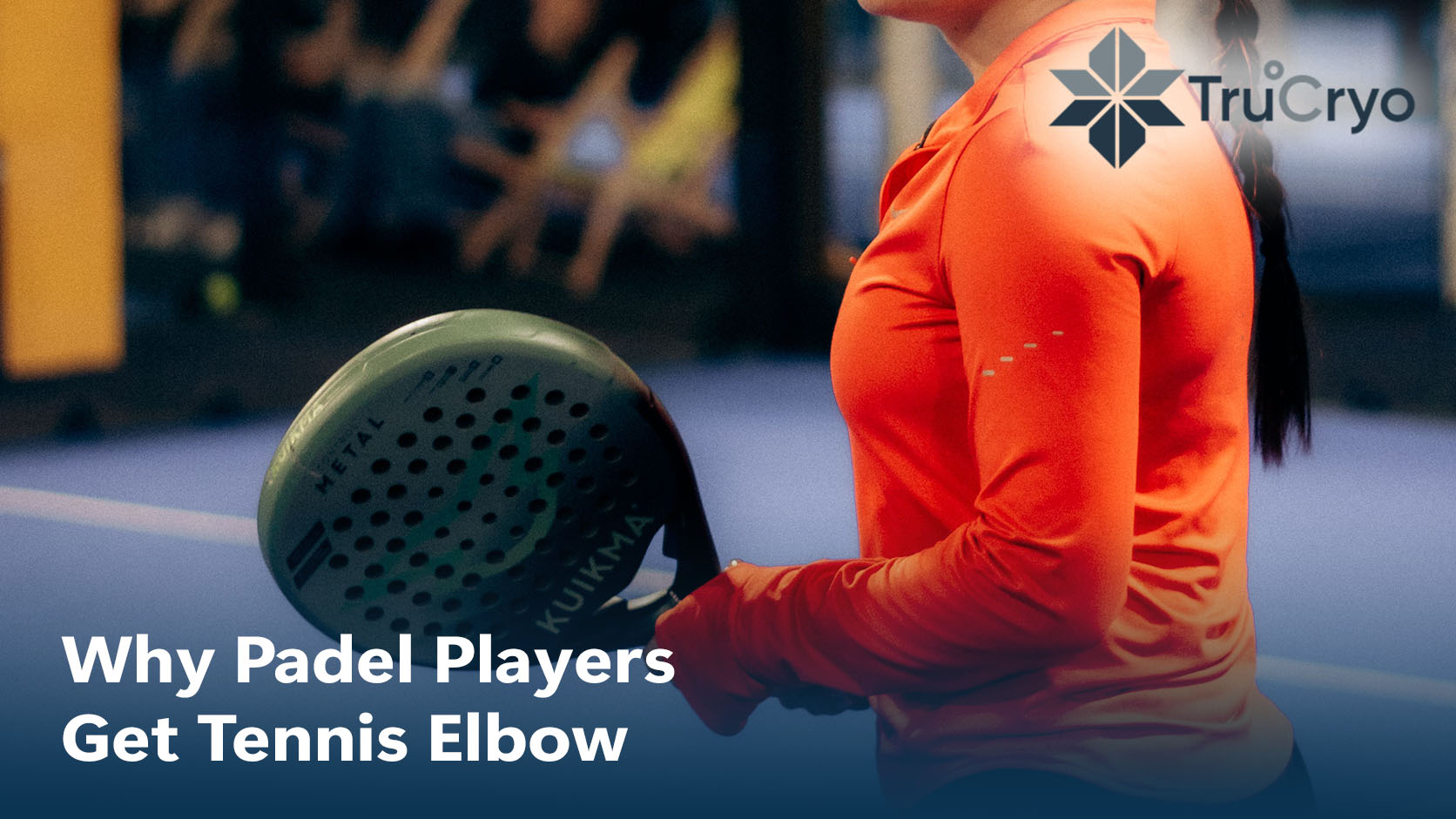
According to a recent article in The Guardian, padel participation in Britain more than doubled in 2025, with 860,000 people playing at least once, compared with 400,000 in 2024, but an unhappy side effect of this is a proliferation of injuries, one of the most common complaints in racket sports are elbow problems and especially lateral elbow tendinopathy, better known as tennis elbow. The injury affects the tendons attaching the forearm extensor muscles to the outside of the elbow. These muscles work every time you grip the racket, control the wrist and stabilise the arm as the racket strikes the ball.
Padel gives them plenty to do. Volleys, overheads, defensive shots, and constant changes of direction mean the racket arm repeatedly grips, accelerates, and then controls the racket. The problem is usually not one dramatic movement. It is accumulated load, another match, a sudden increase in playing frequency, poor technique or a tight grip, and the tendon may stop recovering between sessions.
At first it may just ache afterwards. Then gripping the racket hurts. Eventually even lifting a kettle or turning a door handle can remind you that something is wrong. That is particularly annoying with padel because it is so often social. Missing a match does not just mean missing exercise - it can mean letting down three other players as well.
This is where targeted cooling can have a useful short-term role. TruCryo's Kaasen uses pressurised CO2 to deliver rapid, localised cooling to a selected area such as the elbow and forearm. Cold therapy may help reduce pain in the short term, so where the problem has been properly assessed and continued play is considered sensible, symptom relief may make movement more comfortable and help a player return to the court sooner.
But simply making the elbow feel better and then repeatedly overloading it is not the answer. Longer-term recovery usually means addressing playing volume, grip, technique and progressive strengthening of the forearm and tendon. TruCryo can sit alongside that rehabilitation process, helping manage discomfort while the real work of rebuilding tendon capacity continues.
The objective is not to hide an injury. It is to help manage the uncomfortable period between developing the problem and properly recovering from it - and to get the player back where they want to be: on the padel court.




© 2026 TruCryo Limited. All rights reserved.TruCryo Limited designs and manufactures the Kaasen family of localised cryotherapy systems in the United Kingdom.
Kaasen™ and TruCryo™ are trademarks of Logical Technologies (UK) Limited and are used under licence by TruCryo Limited.
Products are supplied for professional wellbeing, recovery, aesthetics and related non-medical applications. Product availability, regulatory status and permitted use may vary by market.